
Lincoln's Lessons
From The Coaching and Leadership Journal Substack

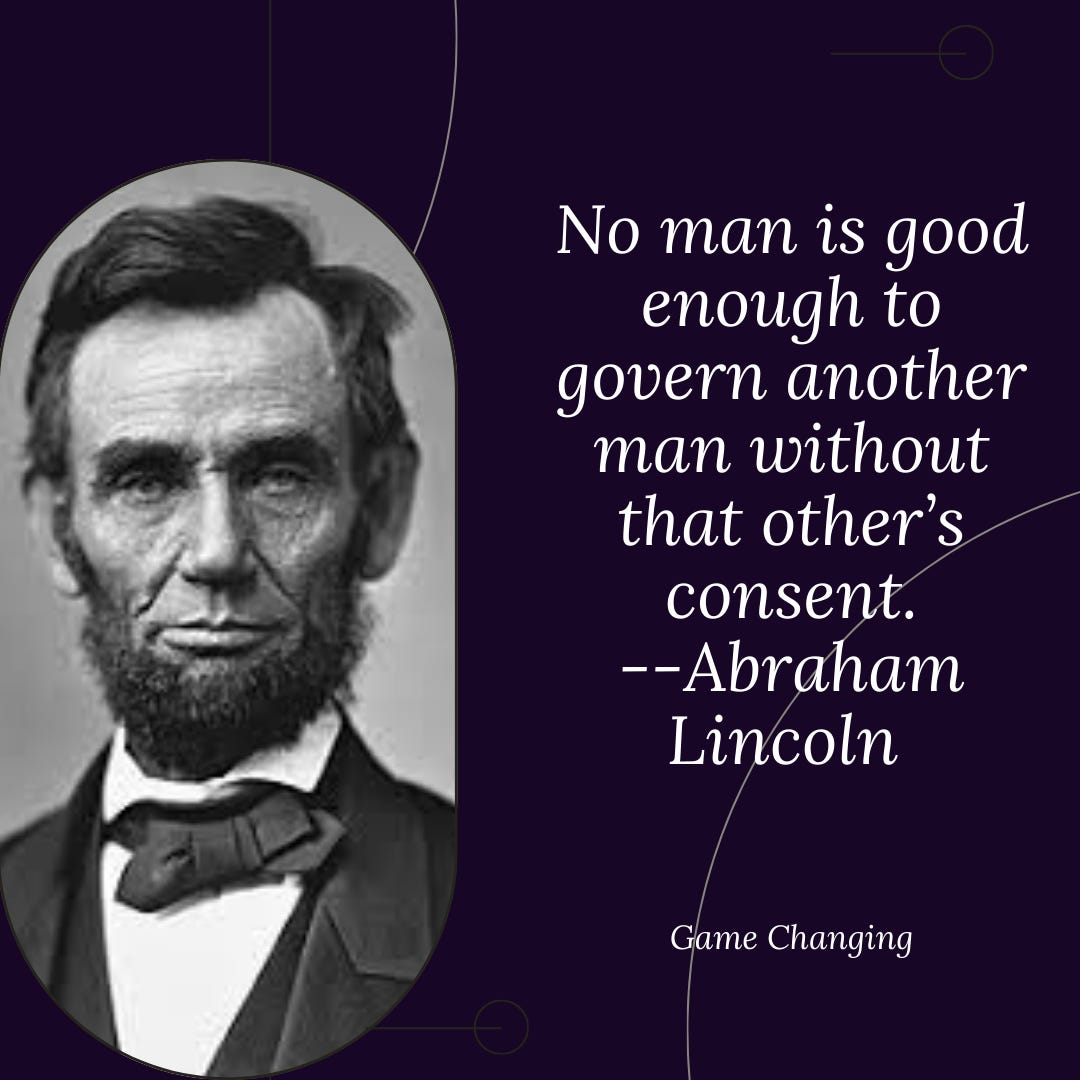
The following appeared on The Coaching and Leadership Journal Substack.
If you haven’t had the chance to watch Steven Spielberg’s movie Lincoln, we encourage you to do so. Leaders can learn from one of America’s greatest presidents. It wasn't Abraham Lincoln's strengths, but the self-discipline with which he used those strengths for the right purpose that made him such a great leader.
He was one of the best communicators of all time.
Lincoln recognized the power of words to weaken and even destroy people. He became highly attuned to the feelings of others, including his enemies. He also became highly measured in the way he communicated in adversarial situations.
This was a crucial quality for leading America at a time when the nation was so divided. (Sound familiar?)
Once, as he and his wife Mary Todd Lincoln were approaching Washington in a carriage, she remarked, "This city is full of enemies," Lincoln injected, "Enemies? Never again must we repeat that word."
On an earlier occasion Lincoln had explained about Southerners: “They are just what we would be in their situation. We are not enemies, but friends. We must not be enemies. Though passion may have strained it must not break our bonds of affection.”
He could direct ridicule at himself.
When, during one of their debates, Stephen Douglas called Lincoln two-faced, Lincoln responded, wryly, "I leave it to my audience. If I had another face, why would I be wearing this one?"
He masterfully handled criticism.
On one occasion, he was informed that the Secretary of War, Edwin Stanton, had refused to execute a presidential order—and further, had called the president a "damn fool." "He called me a damn fool?" Lincoln asked. "Yes! Not once, sir, but twice!" replied the excited congressman, who had brought him this news.
"Well, Stanton speaks what is on his mind, and he is usually right about what he speaks, so if he called me a damn fool, I must be a damn fool. I will go to him now and find out why.”
He had the discipline to sculpt his character.
Even as president, Lincoln's anger occasionally consumed him, making him pour it out in letters to critics, errant generals, and others. He had the self-discipline though not to dispatch these "hot" letters.
They were later discovered, unsigned, in a drawer in the president's desk. In this way, one small step at a time, Lincoln built his self-discipline, and through it, the character of his presidency.
Lincoln's journey suggests that the true measure of a leader lies not in how much we cultivate and exploit our strengths, but in how we work on tapping, in Lincoln's words, the "better angels of our nature" to use our strengths in the service of a cause much higher than our own personal gain.
–The Coaching and Leadership Journal